Catalogue package 113
14-Day Combined Kenya & Tanzania Budget Safari
Journey overview
This private fourteen-day budget safari covers a broad East Africa circuit: Samburu, Aberdare, Lake Nakuru, Masai Mara and Amboseli in Kenya, then Tarangire, Serengeti, Ngorongoro and Lake Manyara in Tanzania. Accommodation uses a confirmed budget camp or basic lodge category rather than named properties.
Safari Highlights
- Private budget safari
- Samburu
- Aberdare
- Lake Nakuru
- Masai Mara
- Amboseli
- Tarangire
- Serengeti
- Ngorongoro
- Lake Manyara
The route
01
Nairobi
02
Samburu
03
Aberdare
04
Lake Nakuru
05
Masai Mara
06
Amboseli
07
Namanga / Arusha
08
Tarangire
09
Serengeti
10
Ngorongoro
11
Lake Manyara
12
Arusha
Day-by-day itinerary
Route: Nairobi → Samburu → Aberdare → Lake Nakuru → Masai Mara → Amboseli → Namanga / Arusha → Tarangire → Serengeti → Ngorongoro → Lake Manyara → Arusha
Day 1
Nairobi to Samburu
The morning starts in Nairobi, from where you continue overland to Samburu, travelling north past Mount Kenya and through Nanyuki and Isiolo into the drier northern country. Once you reach Samburu there is time to check in before heading out among semi-arid northern rangeland of doum palms and riverine forest along the Ewaso Ng'iro river. Your guide works the area for elephant, lion, leopard and the dry-country species often called the Samburu Special Five, with sightings varying by season and conditions. Northern Kenya holds species rarely seen further south, including Grevy's zebra, reticulated giraffe, Beisa oryx, gerenuk and Somali ostrich. Your safari vehicle and guide are used by your party alone. You return for dinner and an overnight stay at Samburu.
Day 2
Full-Day Samburu Safari
The whole day is given to Samburu, with an early start to make the most of the cooler morning hours. You travel through semi-arid northern rangeland of doum palms and riverine forest along the Ewaso Ng'iro river, working the areas your guide judges most productive on the day. Sightings may include elephant, lion, leopard and the dry-country species often called the Samburu Special Five, depending on season and conditions. The river is the reserve's lifeline, and game commonly concentrates along it through the heat of the day. Northern Kenya holds species rarely seen further south, including Grevy's zebra, reticulated giraffe, Beisa oryx, gerenuk and Somali ostrich. Your safari vehicle and guide are used by your party alone. You return to your camp or lodge for dinner and a second night at Samburu.
Day 3
Samburu to Aberdare
The morning starts in Samburu, from where you continue overland to Aberdare, climbing into the central highlands through Nyeri and the tea and coffee country. Lunch and check-in come first, then an afternoon drive through high montane forest, bamboo belt and moorland cut by streams and waterfalls. Wildlife commonly associated with this area includes elephant, buffalo, giant forest hog, bushbuck and, with patience, rarely seen forest species. The Aberdare lodges are built overlooking floodlit waterholes, so wildlife is watched from the building itself rather than from a vehicle. Dinner is served at your Aberdare camp or lodge, where you spend the night.
Day 4
Aberdare to Lake Nakuru
The day opens in Aberdare with a morning departure for Lake Nakuru, travelling through the Rift Valley floor and the farming towns of the Nakuru region. Arrival is followed by check-in and a first drive into a Rift Valley soda lake ringed by yellow-barked acacia woodland and steep escarpment viewpoints. This is good country in which to look for black and white rhino, Rothschild's giraffe, buffalo, waterbuck and dense birdlife. The park operates as a sanctuary and is one of Kenya's more reliable places to look for rhino; flamingo numbers on the lake rise and fall with water levels. Dinner and overnight are at your camp or lodge in Lake Nakuru.
Day 5
Lake Nakuru to Masai Mara
The morning starts in Lake Nakuru, from where you continue overland to Masai Mara, descending the wall of the Great Rift Valley and passing through Narok and Maasai farming country. Lunch and check-in come first, then an afternoon drive through open savanna grassland, acacia stands and the rolling country of the greater Mara ecosystem. There is the possibility of seeing lion, cheetah, elephant, giraffe, buffalo and large herds of plains game, depending on movement and conditions on the day. The reserve is best known for its big cat densities, and between roughly July and October the wildebeest migration commonly moves through the ecosystem. Dinner and overnight are at your camp or lodge in Masai Mara.
Day 6
Full-Day Masai Mara Safari
The whole day is given to Masai Mara, with an early start to make the most of the cooler morning hours. You travel through open savanna grassland, acacia stands and the rolling country of the greater Mara ecosystem, working the areas your guide judges most productive on the day. Species commonly associated with the area include lion, cheetah, elephant, giraffe, buffalo and large herds of plains game. A full day allows morning and late-afternoon drives when animals are most active, with the option of a picnic lunch out in the reserve. The reserve is best known for its big cat densities, and between roughly July and October the wildebeest migration commonly moves through the ecosystem. You return to your camp or lodge for dinner and a second night at Masai Mara.
Day 7
Masai Mara to Amboseli
After breakfast you leave Masai Mara and travel on toward Amboseli, travelling south past Kajiado and through Maasai rangeland toward the Tanzanian border country. After check-in and a chance to freshen up, you head out into open plains, dust flats and spring-fed swamps beneath the bulk of Kilimanjaro. Your guide works the area for large elephant herds, buffalo, zebra, wildebeest, and abundant water birds around the swamps, with sightings varying by season and conditions. Amboseli is known for its free-ranging elephant families, and on clear mornings Mount Kilimanjaro often rises above the plains, though cloud can hide it. The evening is spent at your Amboseli accommodation, with dinner and overnight there.
Day 8
Full-Day Amboseli Safari
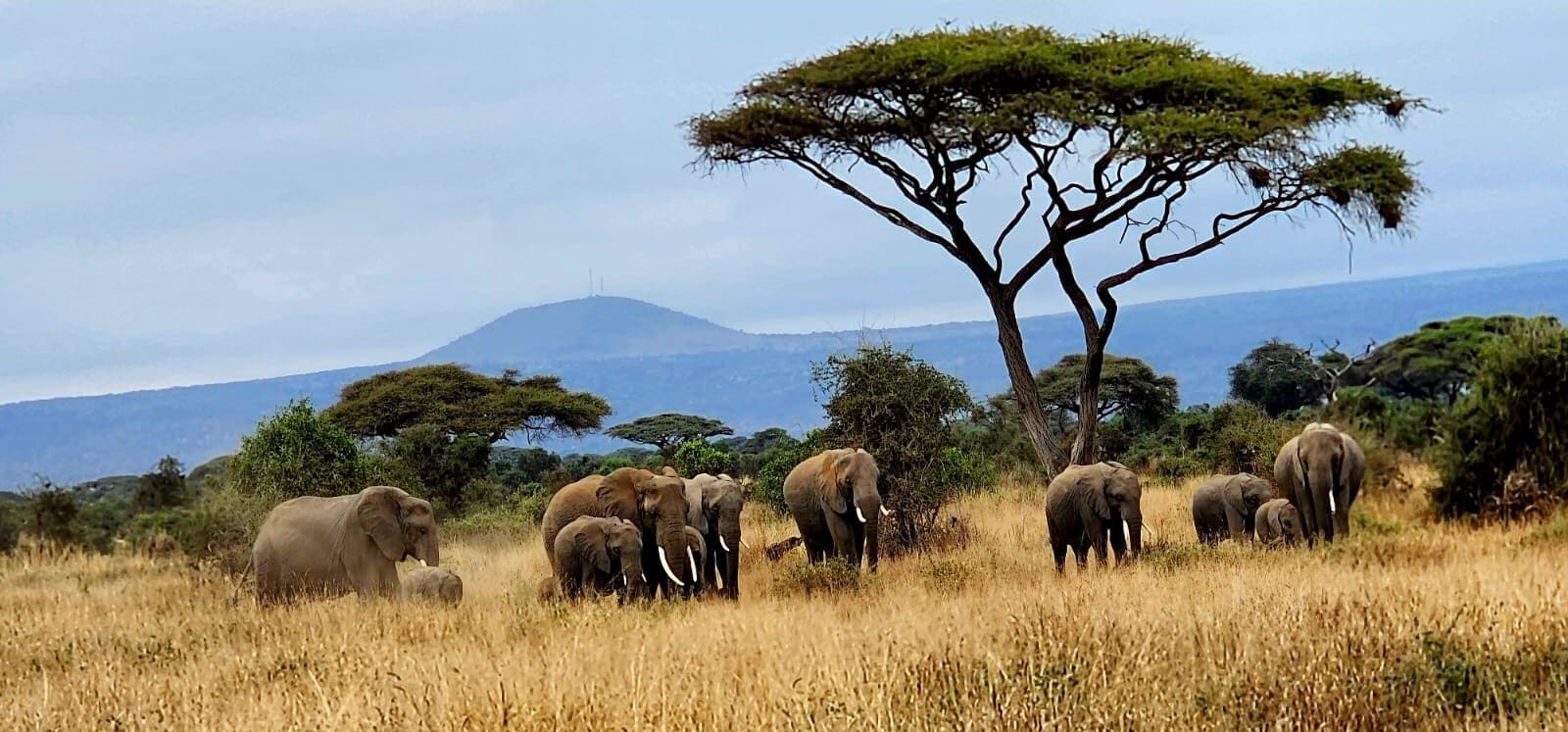
A full day in Amboseli allows you to explore well beyond the areas reached on a short visit. You travel through open plains, dust flats and spring-fed swamps beneath the bulk of Kilimanjaro, working the areas your guide judges most productive on the day. Keep watch for large elephant herds, buffalo, zebra, wildebeest, and abundant water birds around the swamps as you move between the different habitats. The swamps stay green through dry months, drawing elephants and plains game into concentrated, highly photographable groups. Amboseli is known for its free-ranging elephant families, and on clear mornings Mount Kilimanjaro often rises above the plains, though cloud can hide it. The evening returns you to your Amboseli accommodation for dinner and overnight.
Day 9
Amboseli to Arusha via Namanga
Bags are loaded after breakfast and you depart Amboseli bound for Arusha via Namanga, continuing through the farmland and Maasai country below Mount Meru. You reach Arusha in the afternoon and check in for the night, with the evening free to rest before the next stage. The crossing involves border formalities on both sides and an operating-team handover between the Kenyan and Tanzanian crews. Arusha is the staging point for the northern Tanzania circuit and where most safari briefings take place. The night is spent at your Arusha hotel.
Day 10
Arusha to Tarangire
After breakfast you leave Arusha and travel on toward Tarangire, driving south-west from Arusha through Maasai grazing country. After check-in and a chance to freshen up, you head out into rolling country of ancient baobabs, seasonal swamps and the year-round Tarangire River. Wildlife commonly associated with this area includes large elephant herds, zebra, wildebeest, eland and a notably rich birdlife. In the dry season the Tarangire River draws wildlife from a wide area, and the park is famous for its baobab-studded landscape. Dinner and overnight are at your camp or lodge in Tarangire.
Day 11
Tarangire to Serengeti
You leave Tarangire after breakfast and head for Serengeti, crossing the Ngorongoro Conservation Area and descending onto the open plains. Once you reach Serengeti there is time to check in before heading out among vast short-grass plains broken by granite kopjes and seasonal watercourses. Wildlife commonly associated with this area includes lion, cheetah, elephant, giraffe and immense herds of wildebeest and zebra. The Serengeti's wildlife moves with the seasons, so the sector visited is chosen to match where the herds and predators are likely to be at that time of year. Dinner is served at your Serengeti camp or lodge, where you spend the night.
Day 12
Full-Day Serengeti Safari
The whole day is given to Serengeti, with an early start to make the most of the cooler morning hours. The drives cover vast short-grass plains broken by granite kopjes and seasonal watercourses, moving between habitats as conditions change. Species commonly associated with the area include lion, cheetah, elephant, giraffe and immense herds of wildebeest and zebra. The scale of the plains rewards a full day, with time to work several areas rather than rushing between them. The Serengeti's wildlife moves with the seasons, so the sector visited is chosen to match where the herds and predators are likely to be at that time of year. You return to your camp or lodge for dinner and a second night at Serengeti.
Day 13
Serengeti to Ngorongoro and Lake Manyara Area
After breakfast you leave Serengeti and travel on toward Ngorongoro and Lake Manyara Area. Lunch and check-in come first, then an afternoon drive through groundwater forest, open floodplain and an alkaline lake beneath the Rift Valley escarpment. Look for elephant, baboon troops, hippo, giraffe and large numbers of waterbirds including flamingo as the light softens through the afternoon. Manyara is known for its groundwater forest fed by springs at the base of the escarpment, and for lions that are sometimes seen resting in trees. You return for dinner and an overnight stay at Lake Manyara Area.
Day 14
Lake Manyara to Arusha
Following an early breakfast, the day begins with the road transfer from Lake Manyara to Arusha, continuing through the farmland and Maasai country below Mount Meru. You reach Arusha in the afternoon, with the final stretch of road giving time to look back over the journey. Arusha is the staging point for the northern Tanzania circuit and where most safari briefings take place. You are dropped at your Arusha hotel or the airport in the late afternoon.
Package Inclusions
- Transport in a safari vehicle with a pop-up roof for game viewing
- Services of a professional English-speaking driver-guide
- All park and reserve entrance fees as per the itinerary
- Accommodation as specified in the itinerary
- Meals as specified in the itinerary
- All game drives as detailed in the itinerary
- Drinking water in the safari vehicle
- Applicable government taxes
Package Exclusions
- International and domestic flights
- Visa fees and travel insurance
- Tips and gratuities for guides and lodge staff
- Alcoholic and soft drinks
- Items of a personal nature such as laundry and telephone
- Optional activities not listed as included
Optional Activities
These are not included in the safari price unless the itinerary says otherwise. Availability depends on operating conditions, and any of them can be arranged when you plan your trip.
- Maasai Village VisitUSD 10 per person
A guided visit to a nearby Maasai community, arranged locally on request.
- Hot-Air Balloon SafariUSD 450 per person
A dawn balloon flight over the reserve, subject to availability and weather.
Safari FAQs
Will the same vehicle and guide operate in both Kenya and Tanzania?
Not necessarily. Cross-border safaris normally use a route-appropriate handover between the Kenya and Tanzania operating teams. The confirmed arrangement is stated in the final travel documents.
Which border crossing is used?
The crossing follows the confirmed route. Namanga is commonly used on the Amboseli–Arusha axis, while Isebania/Sirari is used for selected Mara–Serengeti road connections.
Are wildlife or migration sightings guaranteed?
No. Wildlife and migration movements are natural and cannot be guaranteed.
Loading enquiry form…